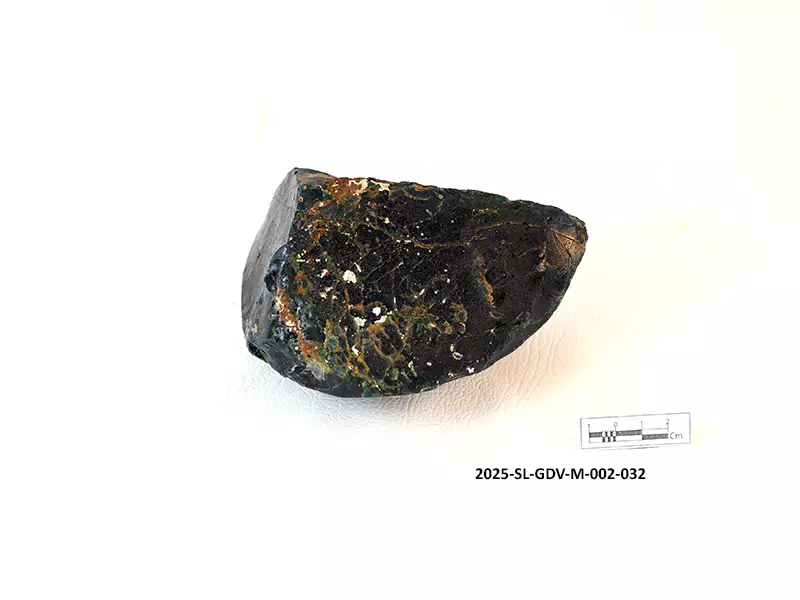
Piece of Glass Ingot
- காலகட்டம்
- Historical
- திகதி/காலம்
- 2025-08-13
- பயன்படுத்தப்பட்ட மூலப்பொருட்கள்
- Glass
- அளவுக் குறியீடுகள் (பரிமாணங்கள்)
- L-13.5cm, H-8.5cm
- கண்டெடுக்கப்பட்ட தளம்
- Godawaya Shipwreck
- தற்போதைய இருப்பிடம்
- Galle > Maritime Archaeology Museum > Gallery 01 > Cabinet 06
- பதிவு எண்
- 2025/SL/S/GDV/M/002/032
முழுமையான விளக்கம்
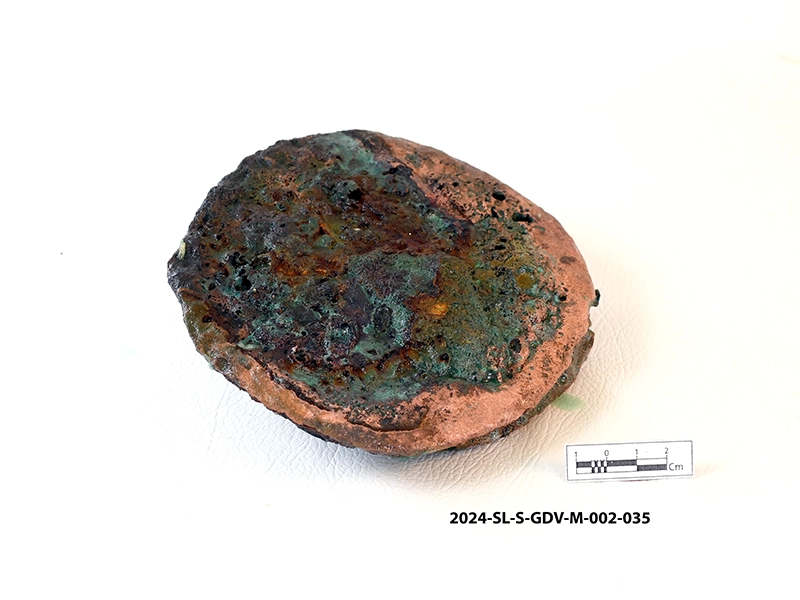
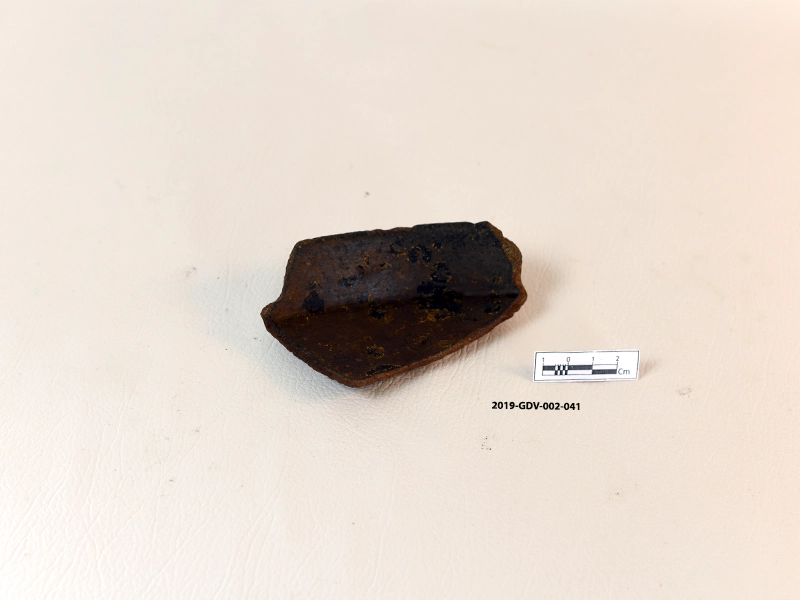
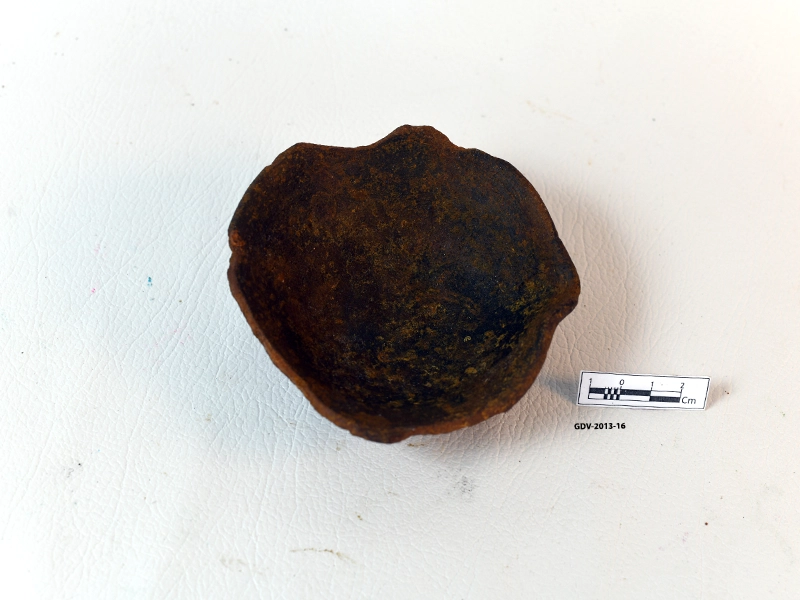
The glass ingots found on the Godawaya shipwreck are rare artifacts in an archaeological context. They were made in specialized workshops by melting natural sand, ashes, lime, and sometimes metal compounds, and were transported across the sea to be re-melted and shaped into beads, bangles, vessels, and other decorative objects.
வரலாற்றுப் பின்னணி
Similar glass ingots were recovered from the Uluburun shipwreck (14th cen. BCE) in Turkey, showing that this was a widespread practice in ancient maritime trade. Glass ingots found at the Godawaya ancient shipwreck are particularly significant, as this is the first discovery of such ingots in Sri Lanka.
The Godawaya ingots occur in a range of colors, including green, dark turquoise, dark blue, and light blue, reflecting the use of different mineral additives during production. Scientific analysis of their chemical composition has provided important clues to their origin. By comparing overall compositions with contemporaneous glass from India and Sri Lanka, researchers have found strong evidence pointing to a South Indian source.
These findings highlight the central role of Sri Lanka in Indian Ocean trade and the circulation of raw materials more than 2,000 years ago.
The Godawaya ingots occur in a range of colors, including green, dark turquoise, dark blue, and light blue, reflecting the use of different mineral additives during production. Scientific analysis of their chemical composition has provided important clues to their origin. By comparing overall compositions with contemporaneous glass from India and Sri Lanka, researchers have found strong evidence pointing to a South Indian source.
These findings highlight the central role of Sri Lanka in Indian Ocean trade and the circulation of raw materials more than 2,000 years ago.