A Plate
- යුගය
- Historical
- දිනය/කාලවකවානුව
- 2025-08-07
- භාවිත කළ අමුද්රව්ය
- Coppor Alloy
- මානයන් (ප්රමාණය)
- L-275 mm, W-160 mm
- කැණීම් කළ/හමු වූ ස්ථානය
- Godawaya Shipwreck
- වත්මන් පිහිටීම
- Galle > Maritime Archaeology Museum > Gallery 01 > Cabinet 07
- ලේඛන අංකය
- 2023/SL/S/GDV/M/002/015
සම්පූර්ණ විස්තරය
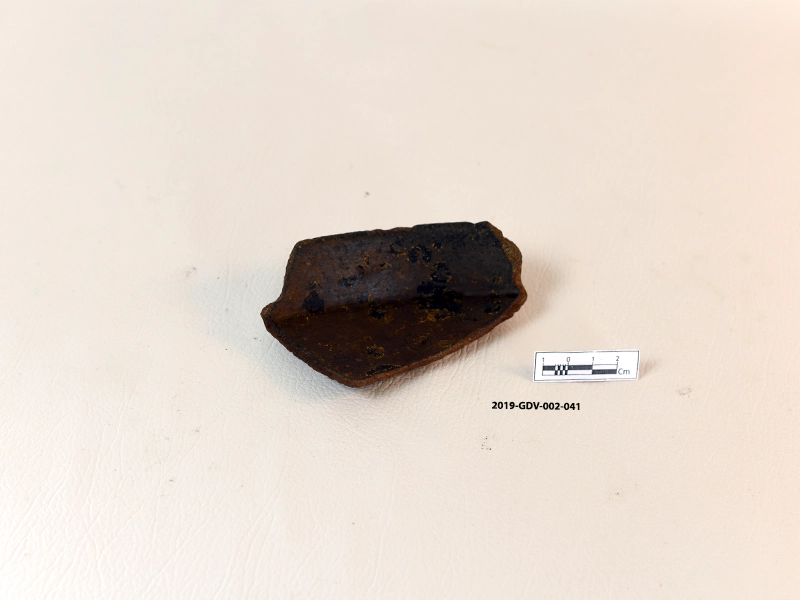
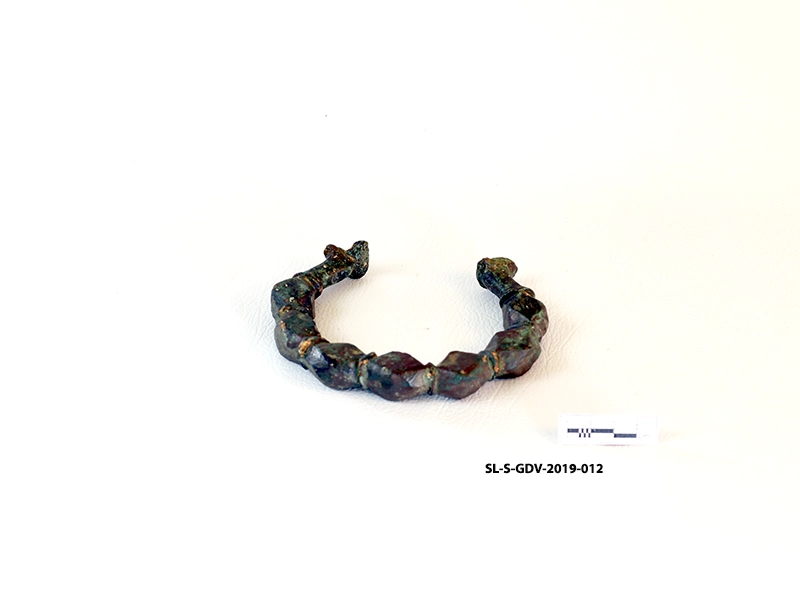
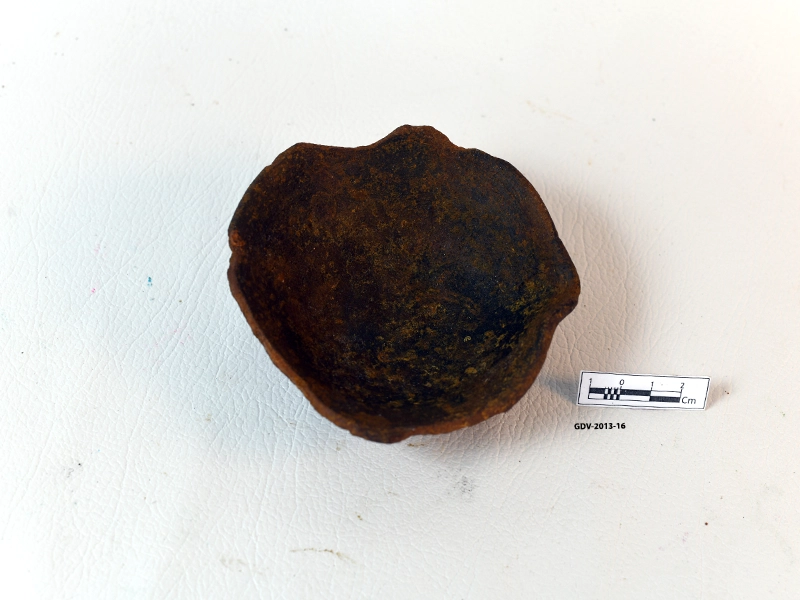
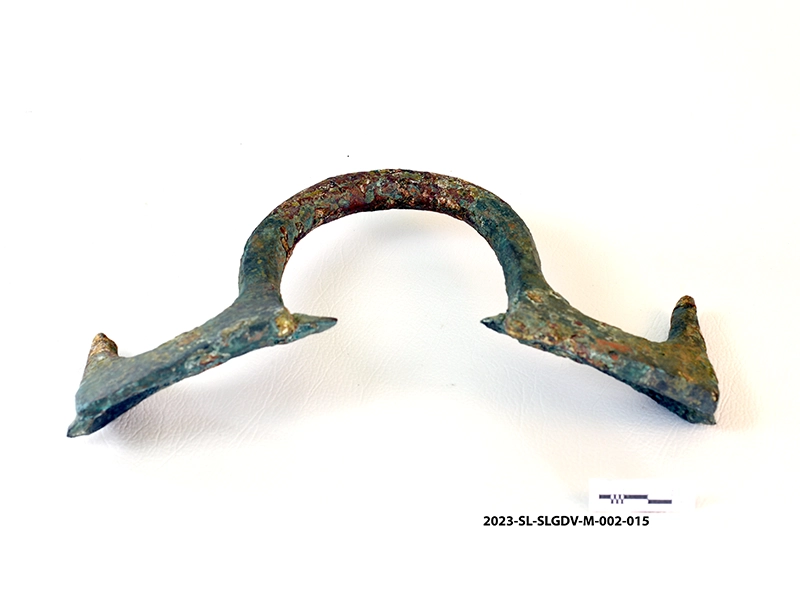
මෙම තඹ හැඬලය යම්කවාකාරහැඩයෙන් යුක්ත වූවකට සම්බන්ධ වූවක් බව එහ ිහැඩය පිළිබඳ සැලකීමේදී පැහැදිළිය. පිටතට නෙරා එන ලෙස නිර්මිත මෙය යමකට වැද්දීම සඳහා ද කපන ලද කත්තුවකින් ද යුතුව නිර්මාණය කර ඇත. නෞකාවේ යම් කොටසකට සම්බන්ධ වූවක් වන මෙය මෙහි නිර්මාණ හැඩය හා ප්රමා ණය ගත්කල විශාල බරක් දරාගැනීමට හෝ ඔසවා ගැනීමට සම්බන්ධ වූවක් ලෙස පෙනී යන්නේ එහි ශක්තිමත්භාවය හා එය නිර්මාණය කළ ලෝහය නිසාවෙනි. දැවමය කොටසකට සමබන්ධ වූවක් ලෙස පෙනීයන්නේ එහි අල්ලු නිර්මාණය කර ඇති අනුපිළිවෙළ හේතුවෙනි. අත්ලට හොඳින් අසුවන සේ ඇල්ලීමට භාවිත වන කොටස නිර්මාණය කර ඇති මෙහි උපයෝගීතාව හරිහැටි අවබෝධකර ගැනීම අපහසුය.
ඓතිහාසික පසුබිම
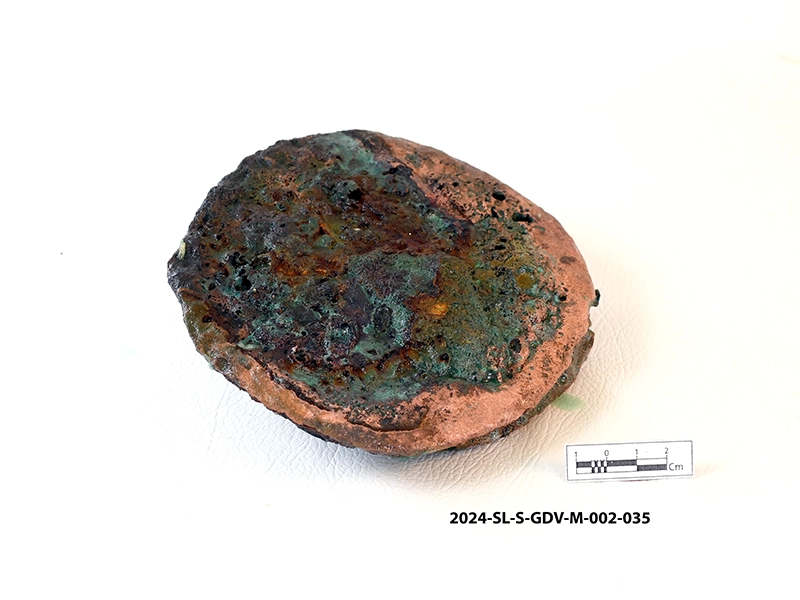
The copper ingots from the Godawaya shipwreck represent a unique archaeological resource for understanding ancient metallurgical production and Indian Ocean trade. While the ingots’ plano-convex form aligns with widespread ancient copper transport traditions, their precise origin remains unresolved. Archaeological proximity to the Akurugoda smelting site and the Seruwila ore deposit suggests a potential local link; however, current compositional evidence points towards a non-local source.